Personalised progressive lens
Orion VR
The only progressive lens that adapts to the wearer, rather than making the wearer adapt to the lens.
Virtual reality records how the eyes and head work together. Your personal gaze map becomes an input for the lens design.
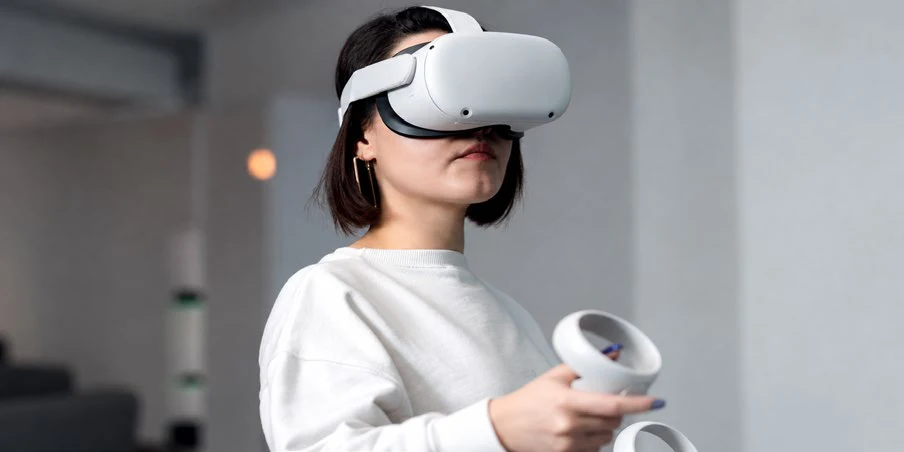 Native Vision · Orion VR
01 / Orion VR Test
Every gaze
has its own way of moving.
To look at something, you move your eyes, your head, or both. The relationship between these movements— Gaze Dynamics— varies from person to person.
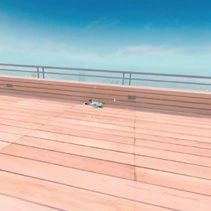
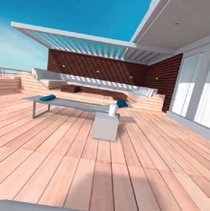
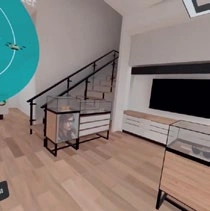
The Orion VR Test records this behaviour in virtual environments, for distance, intermediate and near vision.
Distance · Intermediate · Near vision
02 / Orion VR Map
Your gaze,
on a map.
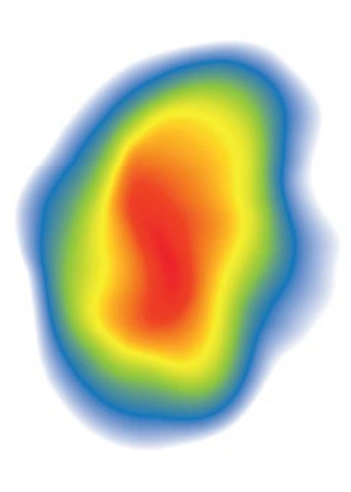
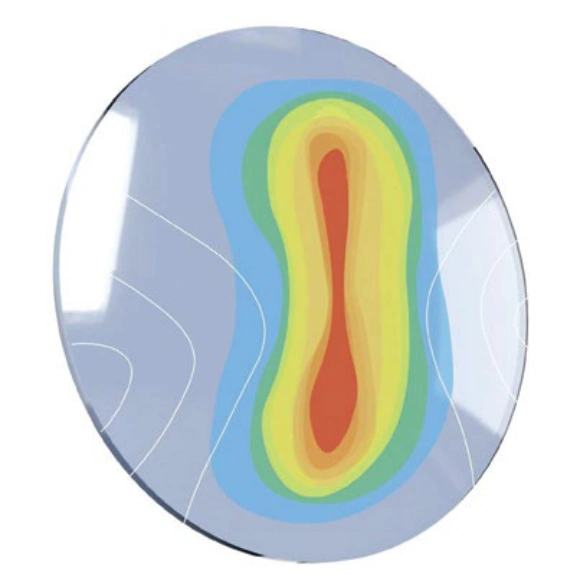
The recording becomes a personal map of visual-field use. It shows where the gaze is directed most often and which areas are used less frequently.
The optician can assess the relationship between horizontal and vertical viewing and the maximum angle of gaze deviation, alongside the Gaze Dynamics profile.
03 / Personalised design
The measurement
becomes a lens.
Orion VR combines gaze dynamics with prescription and frame data. Optical power is calculated for the actual wearing conditions.
- 01Your prescription
- 02Your personal gaze map
- 03The exact frame shape and parameters
- 04Individual fitting data
The technology behind the design
Four technologies.
A specific role.
Select each technology to see how it contributes to the distribution of optical power and the transition between distances.
Digital Ray Path 2
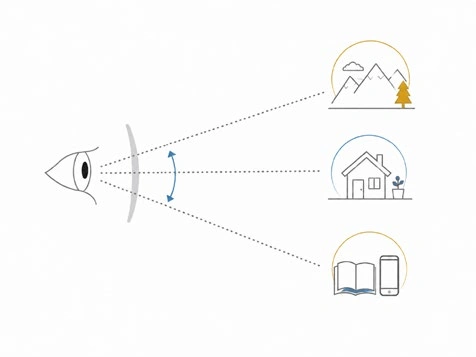
Calculation across the entire field of vision.
The technology calculates the path of light through the lens, aiming to reduce oblique aberrations and improve focus across the visual field.
The calculation considers how the glasses are worn, beyond the nominal prescription power.
Surface Power
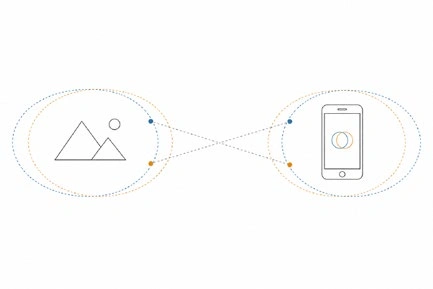
A smoother transition between zones.
The power distribution supports smoother transitions between visual fields and reduces lateral and peripheral aberrations.
The design also aims to reduce sensitivity to changes in frame angle.
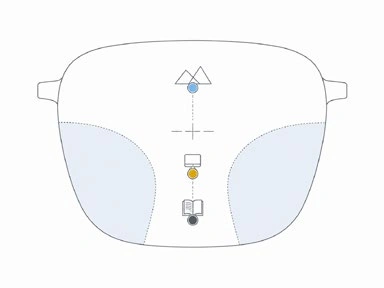
FreeForm
Digital precision on the surface.
Digital processing of the back surface creates the progressive lens design.
The power distribution supports smoother transitions between distance, intermediate and near focus.
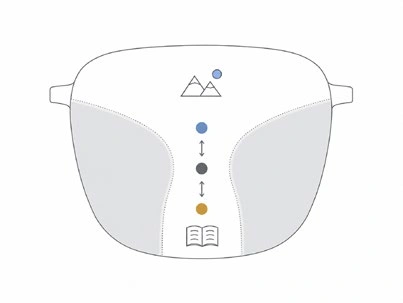
Steady Plus
Balanced intermediate and near vision.
Steady Plus Methodology balances the power distribution in the intermediate and near areas.
The aim is better side vision and fewer distracting distortions when using the different zones.

Orion VR Simulation
Discover
progressive vision
before you buy.
The complementary Simulation application simulates vision through progressive lenses. Guided everyday activities help you become familiar with the viewing distances and the use of the lens zones.
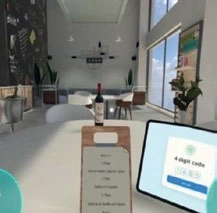
Test → measurement
Records how you look.
Simulation → familiarisation
Shows how the progressive lens is used.
Precision in fitting
In your natural posture.
Measurements are taken with a natural head and body posture and the gaze directed straight ahead. The fitting point therefore connects the personal visual map to the chosen frame.
Fitting information for the optician
The exact lens shape is required for the calculation. Orion VR is a back-surface progressive design, with fitting heights of 14–20 mm in 1 mm increments.
Refractive indices: 1.50 · 1.53 · 1.59 · 1.60 · 1.67 · 1.74. Material selection and parameters are confirmed when ordering.